ABA Programs from Western Michigan University
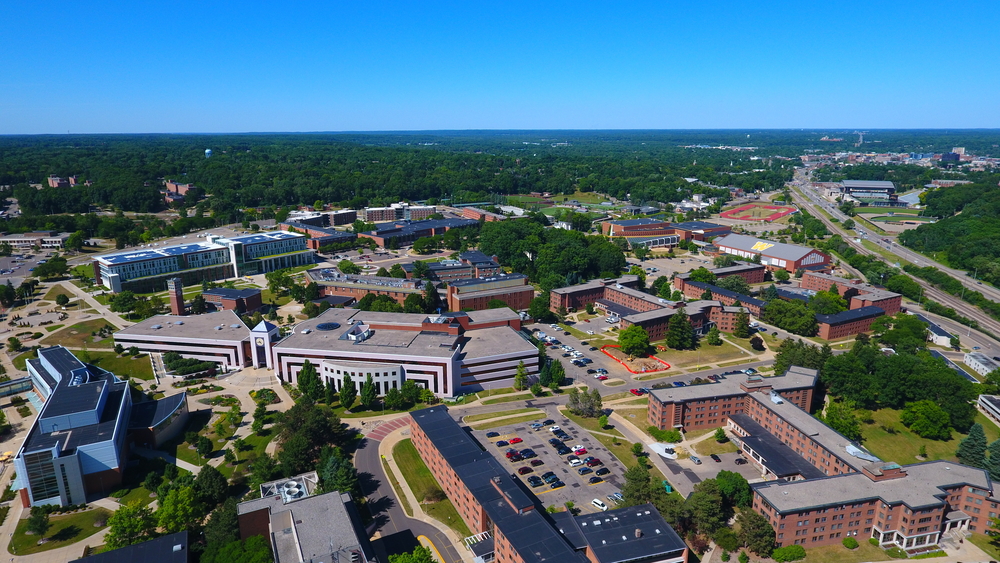
Western Michigan University, 120 years old, started as the fourth teachers’ training college and grew into a major educational institution. The school went through several name changes from Western State Teachers College before it became Western Michigan University in 1957.
The urban campus in Kalamazoo, Michigan draws more than 23,000 students, mostly undergraduates. The Broncos represent the university in NCAA Division I athletics with gold and brown as their colors. Buster Bronco pumps up the crowd as the school’s mascot.
Western Michigan University shines in several specialized fields. The university hosts a yearly International Congress on Medieval Studies and runs one of America’s best aviation programs.
WMU’s Behavior Analysis graduate programs excel at training students in conceptual, simple, and applied foundations of behavior analysis. Students work side by side with faculty members in a mentorship model that creates tailored learning paths based on shared research interests.
The Behavior Analysis program features a Verified Course Sequence (VCS) approved by the Association for Behavior Analysis International (ABAI). Students get all the coursework and hands-on experience they need to become Board Certified Behavior Analysts. The program publishes its pass rates regularly.
Students learn about many applied and experimental areas through detailed coursework, research, and practical experience. On top of that, they get thorough training in key areas like:
- Autism and developmental disabilities
- Health and safety
- Behavioral pharmacology
- Experimental analysis of behavior
- Behavioral neuroscience
Students have access to excellent research spaces including non-human behavior labs, child and adult studies labs, physiological research facilities, simulation labs, and organizational behavior management labs. They also get practical experience in autism treatment, behavioral medicine, performance management, and clinical and educational settings, both outpatient and inpatient.
Washington Monthly and U.S. News and World Report rank WMU among America’s top schools. USNWR also includes it on their global best colleges list. This excellence shows in its behavior analysis programs that prepare students for careers in research, education, and applied settings.
What ABA programs does Western Michigan University offer?
Western Michigan University’s Department of Psychology offers two distinct ABA programs that help students build careers in behavior analysis. These programs feature a natural science orientation and strongly emphasize behavior analysis theory.
Students need to complete at least 37 credit hours with a grade of B or better in all coursework to earn their Master of Arts in Behavior Analysis. The detailed program prepares students for doctoral study or jobs in developmental disabilities, mental illness, substance abuse, education, government, and business industries. The curriculum focuses on eight core areas:
- Principles of Learning and Motivation
- Theoretical Issues in Behavior Analysis
- Professional Ethics
- Applied Behavior Analysis
- Research Methods
- Experimental Analysis of Behavior
- Master’s Thesis or Project
- Professional Experience
Students who want BCBA certification must complete extra coursework in supervision. The program follows a Verified Course Sequence (VCS) approved by the Association for Behavior Analysis International (ABAI). This gives students the coursework and practicum experiences they need to become Board Certified Behavior Analysts.
The Doctor of Philosophy in Behavior Analysis extends beyond the master’s program and requires 79 total credit hours, with 12 credits dedicated to dissertation work. Graduates often become professors and researchers in academic settings, conduct research in government or business, or take on systems-oriented applied positions in human services. PhD students take advanced courses in:
- Principles of behavior analysis
- Conceptual and theoretical issues
- Professional Ethics
- Applied Behavior Analysis
- Research methods
- Experimental analysis of behavior
Students in both programs work closely with faculty mentors throughout their training. They should identify potential faculty mentors before applying since program admission matches students based on shared interests and mentor availability.
The programs’ specialty areas include autism, developmental disabilities, simple operant research, behavioral pharmacology, behavioral neuroscience, behavioral gerontology, safety, and behavioral medicine. Students learn through hands-on experience in autism treatment centers, behavioral medicine facilities, and performance management settings.
The Association for Behavior Analysis International Board has accredited WMU’s ABA programs through December 31, 2032. This recognition makes WMU one of Michigan’s few schools that offers both graduate and doctoral programs with professional approval.
Accreditation
Western Michigan University’s MA and PhD programs in Behavior Analysis have earned prestigious accreditation from the Association for Behavior Analysis International (ABAI) Board through December 31, 2032. WMU stands among an elite group of only 29 schools worldwide that have earned this distinguished credential.
The ABAI Accreditation Board voted to renew full accreditation for both programs for seven years in 2025. Their professional assessment showed the programs met rigorous standards without serious deficiencies. A comprehensive evaluation looked at program quality, curriculum design, faculty qualifications, and student outcomes.
ABAI accreditation plays a crucial role for aspiring behavior analysts. Effective January 1, 2022, all ABAI-accredited programs automatically meet the Behavior Analyst Certification Board’s (BACB) degree and coursework requirements for BCBA® and BCaBA® certification applications via Pathway 1. Graduates can follow a clear path to professional practice through this streamlined certification process.
The Behavior Analysis Certification Board (BACB) has also approved WMU’s behavior analysis programs. This recognition proves their quality and compatibility with industry standards. Graduates benefit from this dual recognition as they pursue certification and employment opportunities.
Western Michigan University’s regional accreditation comes from the Higher Learning Commission (HLC). This institutional accreditation allows WMU to:
- Grant degrees
- Establish curriculum
- Award financial aid
- Accept transfer credits
The Psychology Department’s accreditations reflect the university’s commitment to quality education. WMU maintains over 40 specialized program accreditations in a variety of disciplines, which shows its steadfast dedication to meeting rigorous educational standards.
The accreditation process requires eligibility requests, original accreditation applications, and regular re-accreditation cycles. Programs must complete site visits, address evaluation reports, and maintain compliance with accreditation standards.
Students pursuing behavior analysis careers can trust WMU’s programs to meet the field’s highest standards. Multiple evaluation processes have verified the program’s quality, giving graduates a significant advantage as they seek employment or advance their careers as behavior analysts.
Tuition
The cost of your education plays a major role when you pursue ABA programs at Western Michigan University. Your tuition will depend on where you live and what program you choose.
Graduate students in behavior analysis programs who live in Michigan pay $652 per credit hour. Students from other states pay $1,232 per credit hour. A different source shows slightly different rates – $765 per credit hour for in-state students and $1,147 for out-of-state residents. The Master of Arts program needs 36 credit hours. This means Michigan residents pay about $27,540 while non-residents pay $41,292.
WMU’s average graduate tuition and fees are $31,355, though this varies by program. These rates usually apply when you take 12-15 credit hours each semester, whether you’re an undergraduate or graduate student. Some colleges might charge special rates. This includes the Haworth College of Business, College of Engineering and Applied Sciences, and College of Fine Arts.
You’ll need to plan for more than just tuition. Living on campus costs $9,894 for room and board. This gets you a double room and a 15-meal weekly plan. Books, supplies, and personal expenses are extra costs you should consider.
The good news is you have several ways to get financial help:
- Federal student loans and grants (through FAFSA application)
- Private student loans
- Scholarships based on academic performance, financial need, or multicultural awareness
- Assistantships in teaching, research, or other university positions
Recent stats from 2016 show that about 80% of WMU students got some type of financial aid. Assistantships are a great way to get help especially when you have high-interest private loans. Teaching assistants help professors with their classes, while research assistants work on faculty research projects. You can apply for these positions when you submit your program application.
The Board of Trustees sets tuition rates, which you need to pay on day one of each semester or session. While financial support options exist, not every student gets funding. That’s why you should apply for financial aid early.
The university updates its tuition rates yearly. You should check WMU’s official tuition and financial aid pages for the most current details.
Admissions
Western Michigan University’s ABA programs have specific requirements and a well-laid-out application process. Students can submit their applications through the university’s online graduate application system for master’s and doctoral programs.
The MA program in Behavior Analysis has key deadlines. The priority review deadline falls on January 1, and interviews happen from late January to early February. Students get more time with the final review deadline of February 15, followed by interviews in early to mid-March. Anyone who wants to do BCBA-related fieldwork should aim for summer II admission.
PhD program applications need to reach by December 1, and interviews usually take place in late January. Both programs work on a cohort model – students study the same curriculum and finish together.
You’ll need these academic qualifications:
- A bachelor’s degree that includes at least 18 semester hours in psychology or related fields
- Your cumulative undergraduate GPA should be 3.0 or higher
- Students who don’t have enough psychology credits should complete introductory courses in psychology, behavior analysis, autism studies, research methods, and behavior analysis concepts – WMU recommends this
Your application package should include:
- Official transcripts from every institution you’ve attended
- Your CV or resume
- A personal statement (500-1500 words) that describes your academic background, career goals, and how they match WMU’s program and faculty
- Three recommendation letters with ratings checklists attached
The online application has supplemental questions you need to complete. The GRE scores are helpful but not mandatory for both master’s and doctoral behavior analysis programs. This shows a transformation from earlier requirements of minimum scores in the 50th percentile.
The admissions team looks beyond academic records. They evaluate research experience, work history, social and professional abilities, and how your interests fit with what the program offers. Faculty availability plays a vital role in admission decisions, so you should identify potential faculty mentors before applying.
Getting an interview invitation means you’ve cleared an important hurdle in the admission process. The university sends out admission status letters by April 15.
International students face additional requirements. They must prove their English language skills and show they have enough funds for tuition and living costs.
What sets WMU apart?
Western Michigan University’s Behavior Analysis programs have earned their place among the field’s most respected institutions. The department’s behavioral focus dates back more than 50 years, and many faculty members helped establish the behavior analysis discipline.
The program’s world-renowned faculty leads groundbreaking research in behavior analysis of all types. Students get rich opportunities to explore specialties beyond their standard curriculum through this exceptional team. Faculty members show their steadfast dedication to student growth by connecting theoretical coursework with real-life applications.
WMU’s mentorship model sets it apart from other programs. Students work side by side with faculty throughout their training. This approach gives students tailored guidance as they progress, producing graduates with strong theoretical knowledge and exceptional clinical skills.
The program’s connection with other strong WMU departments creates exciting cross-disciplinary possibilities. Students can enhance their behavior analysis education with courses from:
- Industrial Organizational Behavior Management (systems development, instructional design, supervision)
- Clinical Psychology (motivational interviewing, cognitive processes)
WMU provides excellent research facilities, including rat labs and active nonhuman animal research opportunities. The surrounding community serves as an extended laboratory through mutually beneficial alliances with organizations like Kalamazoo Community Mental Health, Van Buren Intermediate School District, Summit Pointe, Kalamazoo Regional Education Service Area, and Residential Opportunities, Inc.
The program excels in specialized training areas such as autism, developmental disabilities, behavioral pharmacology, experimental analysis, and behavioral neuroscience. These specializations help graduates succeed in various careers spanning developmental disabilities, mental illness, substance abuse, education, government, and business.
WMU’s program’s influence reaches far beyond campus. Its graduates have become influential leaders who shape behavior analysis today. This legacy of excellence confirms WMU’s standing as a premier institution for behavior analysis education.
Next steps
Want to start your ABA career at Western Michigan University? You need to take some substantial steps to become a behavior analyst after choosing a program that matches your goals.
Your first task is to find faculty mentors whose research interests line up with yours. This match plays a vital role in the admissions process. The next step is to prepare your application materials for submission.
The application timeline follows a well-laid-out sequence:
- PhD applications must be submitted by November 1, with interviews typically occurring in late January
- MA program priority review deadline is January 1 with interviews in late January to early February
- Final MA review deadline extends to February 15 with interviews scheduled in early to mid-March
- Applicants interested in BCBA-related fieldwork should specifically apply for summer II admission
Stay active during January and February after submitting your application. Make sure to confirm receipt of all materials, including recommendation letters. A thank you note to your recommenders helps build lasting professional relationships that benefit your career.
Admission decisions arrive in March and April, and you’ll need to accept or decline any offers. Let your recommendation writers know about the outcome as a professional courtesy.
The university’s financial support options include graduate assistantships and fellowships in the Psychology Department and across campus. Students from underrepresented groups should look into the Thurgood Marshall Award or King/Chavez/Parks Fellowship through the Graduate College.
Amber Hutson, the graduate training administrative assistant, can answer your questions about the application process. International applicants need extra preparation time and can find materials from the Office of International Services and Student Affairs.
Students who complete their MA elsewhere and want to pursue a PhD can request course transfers after admission. Your academic mentor, course instructor, and program director will review each course syllabus – a straightforward step in program planning.
These steps will help you succeed in WMU’s respected ABA programs.